FOSTER CARE, REIMAGINED FOR TENNESSEE
Every child deserves a family.
Every Tennessean has a role to play.
More than 7,500 Tennessee children are in state custody right now — but a system can't raise a child. Every Child TN is the network of nonprofits, faith communities, businesses, and everyday Tennesseans showing up for children, youth, and families before, during, and after foster care. Whatever your capacity, there's a way to help.
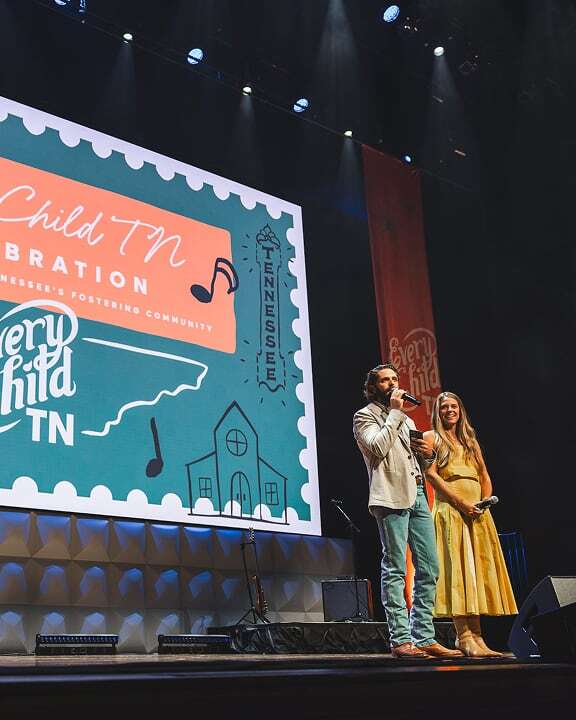
5,325
Children supported with tangible needs to date— 93% of identified needs met.
THE INITIATIVE
A statewide response, built together.
Every Child Tennessee mobilizes Tennesseans to support children, youth, and families before, during, and after foster care.
Launched in 2024, Every Child TN is led by the Governor's Faith-Based and Community Initiative in close partnership with the Tennessee Department of Children's Services.
The initiative organizes its work around four foster care priorities — family preservation, foster family recruitment, foster family retention, and successful transitions out of care. Each marks a specific point in the child welfare journey where community involvement is most necessary, and each is led by a trusted implementation partner mobilizing nonprofits, businesses, faith communities, and individual Tennesseans across the state.
Behind every priority sits the same disciplined approach: cross-sector leadership councils, evidence-based investment, and rigorous tracking of leading and lagging outcomes. It's foster care reimagined — built together, accountable together, sustained together.
THE STATE OF FOSTER CARE
A system facing persistent, measurable gaps.
Across Tennessee, the child welfare system is under sustained pressure — on the front end, in the middle, and at the moment of transition out of care.
5,000+
Children enter foster care in Tennessee each year — often due to preventable circumstances.
7,700
Children currently in care, but only ~5,000 foster families are available, creating a critical placement gap.
30–60%
Of foster families stop fostering each year (national), creating ongoing instability for children.
800+
Youth age out of care annually — with up to 70–80% experiencing adverse outcomes within a few years.
The system, mapped
Where each priority intervenes.
Foster care isn't a single problem — it's a chain of decisions around difficult circumstances, each with measurable outcomes. The four priorities of Every Child TN map to specific points in that chain, anchored by what the research shows actually changes the trajectory. And just upstream of all of it, the Human Flourishing Initiative — a sister GFBCI initiative — works to prevent the chain from starting at all.
stage 00
Further
upstream
A vulnerable Tennessee family — before any CPS report.
By the time the Department of Children's Services receives a maltreatment report, the family is rarely a stranger to Tennessee's public systems. Most are already being served by Tennessee's public assistance systems — SNAP, TANF (Families First), child care assistance, and housing programs through the Department of Human Services, and health coverage through TennCare, the state's Medicaid program administered by the Division of TennCare under the Department of Finance & Administration. The strongest single predictor of child welfare involvement is material hardship — the daily question of whether basic needs are met.
, cta_link_type=link, hover_background_color=transparent, image={alt=null, src=null}, left_border_color=transparent, left_border_style=none, link={url={type=EXTERNAL, content_id=null, href=, href_with_scheme=}, open_in_new_tab=false, no_follow=false, sponsored=false, user_generated_content=false, rel=}, link_aria_label=, padding=5}A vulnerable Tennessee family — before any CPS report.
By the time the Department of Children's Services receives a maltreatment report, the family is rarely a stranger to Tennessee's public systems. Most are already being served by Tennessee's public assistance systems — SNAP, TANF (Families First), child care assistance, and housing programs through the Department of Human Services, and health coverage through TennCare, the state's Medicaid program administered by the Division of TennCare under the Department of Finance & Administration. The strongest single predictor of child welfare involvement is material hardship — the daily question of whether basic needs are met.
Causal evidence — the upstream link
Strengthening safety-net programs causally reduces child welfare system involvement.
8–14%
reduction in CPS reports and foster care caseloads associated with every 5% increase in SNAP participation among families with children. Parallel research finds Medicaid expansion, EITC increases, and TANF generosity each independently reduce child neglect rates.
Johnson-Motoyama et al., Health Affairs (2022); Brown et al. (2019); Berger et al. (2017); Slack & Berger (2021).
, cta_link_type=link, hover_background_color=transparent, image={alt=null, src=null}, left_border_color=transparent, left_border_style=none, link={url={type=EXTERNAL, content_id=null, href=, href_with_scheme=}, open_in_new_tab=false, no_follow=false, sponsored=false, user_generated_content=false, rel=}, link_aria_label=, padding=5}Causal evidence — the upstream link
Strengthening safety-net programs causally reduces child welfare system involvement.
8–14%
reduction in CPS reports and foster care caseloads associated with every 5% increase in SNAP participation among families with children. Parallel research finds Medicaid expansion, EITC increases, and TANF generosity each independently reduce child neglect rates.
Johnson-Motoyama et al., Health Affairs (2022); Brown et al. (2019); Berger et al. (2017); Slack & Berger (2021).
— Tennessee, 1996 — the structural divide
When DCS was created, vulnerable children and vulnerable families were placed in different state agencies.
In April 1996, the Tennessee General Assembly created the Department of Children's Services, consolidating child welfare services from across state government in response to a system in crisis. The reform was necessary — but it also formalized a split between the agencies serving vulnerable children (DCS) and the agencies serving vulnerable families (DHS, administering SNAP, TANF/Families First, TennCare, and child care assistance). For nearly three decades, these systems have operated largely in parallel — without the coordination needed to prevent crisis upstream.
, cta_link_type=link, hover_background_color=transparent, image={alt=null, src=null}, left_border_color=primary-dark, left_border_style=thick, link={url={type=EXTERNAL, content_id=null, href=, href_with_scheme=}, open_in_new_tab=false, no_follow=false, sponsored=false, user_generated_content=false, rel=}, link_aria_label=, padding=5}— Tennessee, 1996 — the structural divide
When DCS was created, vulnerable children and vulnerable families were placed in different state agencies.
In April 1996, the Tennessee General Assembly created the Department of Children's Services, consolidating child welfare services from across state government in response to a system in crisis. The reform was necessary — but it also formalized a split between the agencies serving vulnerable children (DCS) and the agencies serving vulnerable families (DHS, administering SNAP, TANF/Families First, TennCare, and child care assistance). For nearly three decades, these systems have operated largely in parallel — without the coordination needed to prevent crisis upstream.
A sister GFBCI initiative
This is where the Human Flourishing Initiative operates.
HFI builds county-level alliances that bring together DHS, DCS, schools, faith communities, and local organizations around vulnerable families before they reach the threshold of CPS involvement. The premise is straightforward: by focusing the full weight of county resources on a family to reduce avoidable crises, we can help more children remain safely with their families.
Child welfare is a lagging indicator. Every removal represents a chain of unmet needs upstream. ECTN's work is critical when crisis hits — HFI's work can be even more powerful when it stops crisis from forming.
, cta_link_type=link, hover_background_color=transparent, image={alt=null, src=null}, left_border_color=primary-dark, left_border_style=thick, link={url={type=EXTERNAL, content_id=null, href=, href_with_scheme=}, open_in_new_tab=false, no_follow=false, sponsored=false, user_generated_content=false, rel=}, link_aria_label=, padding=5}A sister GFBCI initiative
This is where the Human Flourishing Initiative operates.
HFI builds county-level alliances that bring together DHS, DCS, schools, faith communities, and local organizations around vulnerable families before they reach the threshold of CPS involvement. The premise is straightforward: by focusing the full weight of county resources on a family to reduce avoidable crises, we can help more children remain safely with their families.
Child welfare is a lagging indicator. Every removal represents a chain of unmet needs upstream. ECTN's work is critical when crisis hits — HFI's work can be even more powerful when it stops crisis from forming.
stage 01
Before entry
A Tennessee family in crisis
Each year, more than 5,000 Tennessee children enter foster care. Many families who come to the attention of the child welfare system are also facing concrete needs (housing instability, food insecurity, transportation barriers, or child care challenges). Meeting those needs early can reduce stress, strengthen safety, and help more children remain safely with their families when it is appropriate.

, cta_link_type=link, hover_background_color=transparent, image={alt=null, src=null}, left_border_color=transparent, left_border_style=none, link={url={type=EXTERNAL, content_id=null, href=, href_with_scheme=}, open_in_new_tab=false, no_follow=false, sponsored=false, user_generated_content=false, rel=}, link_aria_label=, padding=5}A Tennessee family in crisis
Each year, more than 5,000 Tennessee children enter foster care. Many families who come to the attention of the child welfare system are also facing concrete needs (housing instability, food insecurity, transportation barriers, or child care challenges). Meeting those needs early can reduce stress, strengthen safety, and help more children remain safely with their families when it is appropriate.
With tangible needs met
Family has greater likelihood of staying together
, cta_link_type=link, hover_background_color=transparent, image={alt=null, src=null}, left_border_color=orange, left_border_style=thick, link={url={type=EXTERNAL, content_id=null, href=, href_with_scheme=}, open_in_new_tab=false, no_follow=false, sponsored=false, user_generated_content=false, rel=}, link_aria_label=, padding=5}With tangible needs met
Family has greater likelihood of staying together
Without timely support
Child has greater likelihood of being removed
, cta_link_type=link, hover_background_color=transparent, image={alt=null, src=null}, left_border_color=dark_20, left_border_style=thick, link={url={type=EXTERNAL, content_id=null, href=, href_with_scheme=}, open_in_new_tab=false, no_follow=false, sponsored=false, user_generated_content=false, rel=}, link_aria_label=, padding=5}
Without timely support
Child has greater likelihood of being removed
Causal evidence
Providing economic and concrete supports has a causal effect on reducing child maltreatment and child welfare entry.
20 of 24
studies in a peer-reviewed systematic review found a statistically significant causal relationship between economic and concrete supports (cash transfers, housing, SNAP, Medicaid, etc.) and improved child welfare outcomes — including reduced foster care entry. Zero studies found unfavorable effects.
Chapin Hall, A Systematic Review of Economic & Concrete Support to Prevent Child Maltreatment (December 2024).
, cta_link_type=link, hover_background_color=transparent, image={alt=null, src=null}, left_border_color=transparent, left_border_style=none, link={url={type=EXTERNAL, content_id=null, href=, href_with_scheme=}, open_in_new_tab=false, no_follow=false, sponsored=false, user_generated_content=false, rel=}, link_aria_label=, padding=5}Causal evidence
Providing economic and concrete supports has a causal effect on reducing child maltreatment and child welfare entry.
20 of 24
studies in a peer-reviewed systematic review found a statistically significant causal relationship between economic and concrete supports (cash transfers, housing, SNAP, Medicaid, etc.) and improved child welfare outcomes — including reduced foster care entry. Zero studies found unfavorable effects.
Chapin Hall, A Systematic Review of Economic & Concrete Support to Prevent Child Maltreatment (December 2024).
If upstream prevention doesn't reach the family in time, this is where ECTN's Priority 01 — Preservation operates — meeting the tangible need at the moment of crisis through CarePortal.
See how, cta_link_type=link, hover_background_color=transparent, image={alt=null, src=null}, left_border_color=orange, left_border_style=thick, link={url={type=EXTERNAL, content_id=null, href=, href_with_scheme=}, open_in_new_tab=false, no_follow=false, sponsored=false, user_generated_content=false, rel=}, link_aria_label=, padding=5}If upstream prevention doesn't reach the family in time, this is where ECTN's Priority 01 — Preservation operates — meeting the tangible need at the moment of crisis through CarePortal.
See how— Relative caregiver program as the first response
Before formal foster care: a relative, family friend, or trusted adult.
When a Tennessee family reaches a moment of crisis, the first question DCS asks is whether someone in the child's existing network — a grandparent, aunt or uncle, family friend, or other trusted adult — can step in. Keeping a child within their circle of trust before formal foster care begins preserves identity, school, community, and continuity of care.
, cta_link_type=link, hover_background_color=transparent, image={alt=null, src=null}, left_border_color=orange, left_border_style=thick, link={url={type=EXTERNAL, content_id=null, href=, href_with_scheme=}, open_in_new_tab=false, no_follow=false, sponsored=false, user_generated_content=false, rel=}, link_aria_label=, padding=5}— Relative caregiver program as the first response
Before formal foster care: a relative, family friend, or trusted adult.
When a Tennessee family reaches a moment of crisis, the first question DCS asks is whether someone in the child's existing network — a grandparent, aunt or uncle, family friend, or other trusted adult — can step in. Keeping a child within their circle of trust before formal foster care begins preserves identity, school, community, and continuity of care.
stage 02
In foster care
7,700
children in care
vs.
~5,000
foster families available
7,700
children in care
vs.
~5,000
foster families available
A nearly 3,000-family gap — especially severe for teens, sibling groups, and youth with higher needs. And nationally, 30–60% of foster families exit each year, meaning the gap doesn't shrink unless retention works as hard as recruitment.
— When formal placement is needed, kinship comes first
Tennessee law requires that relatives be considered before non-kinship foster homes.
When a child enters DCS custody, the department must prioritize locating an appropriate kinship foster placement for at least the first 30 days. Relatives who become approved kinship foster parents are supported as foster families through DCS.
30% of children in U.S. foster care were placed with relatives in FY2024 — the highest rate in the federal data set.
, cta_link_type=link, hover_background_color=transparent, image={alt=null, src=null}, left_border_color=orange, left_border_style=thick, link={url={type=EXTERNAL, content_id=null, href=, href_with_scheme=}, open_in_new_tab=false, no_follow=false, sponsored=false, user_generated_content=false, rel=}, link_aria_label=, padding=5}— When formal placement is needed, kinship comes first
Tennessee law requires that relatives be considered before non-kinship foster homes.
When a child enters DCS custody, the department must prioritize locating an appropriate kinship foster placement for at least the first 30 days. Relatives who become approved kinship foster parents are supported as foster families through DCS.
30% of children in U.S. foster care were placed with relatives in FY2024 — the highest rate in the federal data set.
— When kinship is unavailable
The next best placement is a licensed foster home with a family-like setting.
Every child who can't be placed with a relative still needs a stable, family-like home — not just a placement, but people who show up for them day after day. That's exactly where Tennessee's gap is widest, and it's where the community has the power to step in.
~3000 gap in Tennessee between children in care and homes available.
This is where Priorities 02 — Recruitment operates. We need a comprehensive and coordinated effort to recruit more foster homes. The Contingent, our recruitment partner, has developed a tech-forward strategy to recruit more foster families that can support all kids in care. See how
— When kinship is unavailable
The next best placement is a licensed foster home with a family-like setting.
Every child who can't be placed with a relative still needs a stable, family-like home — not just a placement, but people who show up for them day after day. That's exactly where Tennessee's gap is widest, and it's where the community has the power to step in.
~3000 gap in Tennessee between children in care and homes available.
This is where Priorities 02 — Recruitment operates. We need a comprehensive and coordinated effort to recruit more foster homes. The Contingent, our recruitment partner, has developed a tech-forward strategy to recruit more foster families that can support all kids in care. See how
The stability evidence
Placement stability is one of the strongest predictors of positive adjustment for children in foster care — more so than cognitive ability or social skills.
63%
increase in behavior problems among children in unstable placements versus those who achieve early stability. Each placement move compounds the risk of poor educational outcomes, mental health challenges, and long-term involvement with the justice system.
Rubin et al., Pediatrics (2007); Proctor et al. (2010); Casey Family Programs synthesis.
, cta_link_type=link, hover_background_color=transparent, image={alt=null, src=null}, left_border_color=transparent, left_border_style=none, link={url={type=EXTERNAL, content_id=null, href=, href_with_scheme=}, open_in_new_tab=false, no_follow=false, sponsored=false, user_generated_content=false, rel=}, link_aria_label=, padding=5}The stability evidence
Placement stability is one of the strongest predictors of positive adjustment for children in foster care — more so than cognitive ability or social skills.
63%
increase in behavior problems among children in unstable placements versus those who achieve early stability. Each placement move compounds the risk of poor educational outcomes, mental health challenges, and long-term involvement with the justice system.
Rubin et al., Pediatrics (2007); Proctor et al. (2010); Casey Family Programs synthesis.
— The reason placements end
Foster families need support — or they don't last.
National research consistently identifies lack of support as the top reason foster parents quit. Survey data shows 44% of foster parents did not receive the support they needed during periods of burnout. Without sustained training, respite, community, and emotional support, foster families close their homes — and the children placed with them have to be moved. The cycle of instability accelerates.
30–60%
of licensed foster homes drop out of fostering each year nationally — many within their first year. For a child's outcomes to improve, foster families have to stay solid for the duration of placement. That requires support.
— The reason placements end
Foster families need support — or they don't last.
National research consistently identifies lack of support as the top reason foster parents quit. Survey data shows 44% of foster parents did not receive the support they needed during periods of burnout. Without sustained training, respite, community, and emotional support, foster families close their homes — and the children placed with them have to be moved. The cycle of instability accelerates.
30–60%
of licensed foster homes drop out of fostering each year nationally — many within their first year. For a child's outcomes to improve, foster families have to stay solid for the duration of placement. That requires support.
This is where Priority 03 — Retention operates. Recruitment alone never closes the gap if families burn out faster than they're added. Tennessee Kids Belong, our retention partner, mobilizes faith communities, churches, and local supporters to wrap around foster families with practical and emotional support — directly addressing the support gap that drives burnout and protecting placement stability for the children in their care. See how
, cta_link_type=link, hover_background_color=transparent, image={alt=null, src=null}, left_border_color=orange, left_border_style=thick, link={url={type=EXTERNAL, content_id=null, href=, href_with_scheme=}, open_in_new_tab=false, no_follow=false, sponsored=false, user_generated_content=false, rel=}, link_aria_label=, padding=5}This is where Priority 03 — Retention operates. Recruitment alone never closes the gap if families burn out faster than they're added. Tennessee Kids Belong, our retention partner, mobilizes faith communities, churches, and local supporters to wrap around foster families with practical and emotional support — directly addressing the support gap that drives burnout and protecting placement stability for the children in their care. See how
stage 03
Four ways out
Of the 176,730 children who exited foster care nationally in FY2024, the federal AFCARS data shows four primary outcomes — with vastly different long-term trajectories.
45%
of FY2024 exits
Reunited With Family
Reunification
The child returns home to their family of origin once the conditions that led to removal are resolved.
In Tennessee, nearly half of all foster care exits are reunifications.
, cta_link_type=link, hover_background_color=transparent, image={alt=null, src=null}, left_border_color=transparent, left_border_style=none, link={url={type=EXTERNAL, content_id=null, href=, href_with_scheme=}, open_in_new_tab=false, no_follow=false, sponsored=false, user_generated_content=false, rel=}, link_aria_label=, padding=5, top_border_color=orange, top_border_style=thick}45%
of FY2024 exits
Reunited With Family
Reunification
The child returns home to their family of origin once the conditions that led to removal are resolved.
In Tennessee, nearly half of all foster care exits are reunifications.
11%
of FY2024 exits
Permanency with guardian
Kinship guardianship
A relative or trusted adult becomes the child's permanent legal guardian — preserving family ties without terminating parental rights.
Tennessee's Relative Caregiver Program supports this option statewide.
, cta_link_type=link, hover_background_color=transparent, image={alt=null, src=null}, left_border_color=transparent, left_border_style=none, link={url={type=EXTERNAL, content_id=null, href=, href_with_scheme=}, open_in_new_tab=false, no_follow=false, sponsored=false, user_generated_content=false, rel=}, link_aria_label=, padding=5, top_border_color=orange, top_border_style=thick}11%
of FY2024 exits
Permanency with guardian
Kinship guardianship
A relative or trusted adult becomes the child's permanent legal guardian — preserving family ties without terminating parental rights.
Tennessee's Relative Caregiver Program supports this option statewide.
27%
of FY2024 exits
Permanency through adoption
Adoption
Termination of Parental Rights is a court process that can take up to two years before adoption is finalized — during which the child waits in care.
~500 Tennessee youth are currently legally available for adoption without an identified home.
, cta_link_type=link, hover_background_color=transparent, image={alt=null, src=null}, left_border_color=transparent, left_border_style=none, link={url={type=EXTERNAL, content_id=null, href=, href_with_scheme=}, open_in_new_tab=false, no_follow=false, sponsored=false, user_generated_content=false, rel=}, link_aria_label=, padding=5, top_border_color=dark_20, top_border_style=thick}27%
of FY2024 exits
Permanency through adoption
Adoption
Termination of Parental Rights is a court process that can take up to two years before adoption is finalized — during which the child waits in care.
~500 Tennessee youth are currently legally available for adoption without an identified home.
9%
of FY2024 exits
Independent Living
Aging out
The child turns 18 in foster care without ever achieving a permanent family — entering adulthood largely on their own.
854 Tennessee youth aged out in 2024.
, cta_link_type=link, hover_background_color=transparent, image={alt=null, src=null}, left_border_color=transparent, left_border_style=none, link={url={type=EXTERNAL, content_id=null, href=, href_with_scheme=}, open_in_new_tab=false, no_follow=false, sponsored=false, user_generated_content=false, rel=}, link_aria_label=, padding=5, top_border_color=primary-dark, top_border_style=thick}9%
of FY2024 exits
Independent Living
Aging out
The child turns 18 in foster care without ever achieving a permanent family — entering adulthood largely on their own.
854 Tennessee youth aged out in 2024.
stage 04
If they age out
For Tennessee youth aging out of foster care, the outcomes by age 21 are stark.
50%+
have been incarcerated by age 21
, cta_link_type=link, hover_background_color=transparent, image={alt=null, src=null}, left_border_color=secondary, left_border_style=none, link={url={type=EXTERNAL, content_id=null, href=, href_with_scheme=}, open_in_new_tab=false, no_follow=false, sponsored=false, user_generated_content=false, rel=}, link_aria_label=, padding=6, top_border_color=transparent, top_border_style=none}50%+
have been incarcerated by age 21
35%+
are without stable housing
, cta_link_type=link, hover_background_color=transparent, image={alt=null, src=null}, left_border_color=secondary, left_border_style=none, link={url={type=EXTERNAL, content_id=null, href=, href_with_scheme=}, open_in_new_tab=false, no_follow=false, sponsored=false, user_generated_content=false, rel=}, link_aria_label=, padding=6, top_border_color=transparent, top_border_style=none}35%+
are without stable housing
~50%+
are unemployed
, cta_link_type=link, hover_background_color=transparent, image={alt=null, src=null}, left_border_color=secondary, left_border_style=none, link={url={type=EXTERNAL, content_id=null, href=, href_with_scheme=}, open_in_new_tab=false, no_follow=false, sponsored=false, user_generated_content=false, rel=}, link_aria_label=, padding=6, top_border_color=transparent, top_border_style=none}~50%+
are unemployed
70–80%
face homelessness, addiction, incarceration, or trafficking by age 21 — without proper support.
, cta_link_type=link, hover_background_color=transparent, image={alt=null, src=null}, left_border_color=transparent, left_border_style=none, link={url={type=EXTERNAL, content_id=null, href=, href_with_scheme=}, open_in_new_tab=false, no_follow=false, sponsored=false, user_generated_content=false, rel=}, link_aria_label=, padding=5, top_border_color=transparent}70–80%
face homelessness, addiction, incarceration, or trafficking by age 21 — without proper support.
This is where Priority 04 — Transition operates. See how
, cta_link_type=link, hover_background_color=transparent, image={alt=null, src=null}, left_border_color=orange, left_border_style=thick, link={url={type=EXTERNAL, content_id=null, href=, href_with_scheme=}, open_in_new_tab=false, no_follow=false, sponsored=false, user_generated_content=false, rel=}, link_aria_label=, padding=5}This is where Priority 04 — Transition operates. See how
- Johnson-Motoyama, M., et al., Associations Between State SNAP Policies, Child Protective Services Involvement, and Foster Care in the US, 2004–2016, JAMA Network Open / Health Affairs (2022); Brown, E., et al. (2019); Berger, L., et al. (2017); Slack, K. & Berger, L. (2021) on material hardship as the strongest predictor of CPS involvement.
- Chapin Hall, Meeting Family Needs: A Framework for an Integrated Family and Child Well-Being System (March 2024); Cusick et al., A Systematic Review of Economic & Concrete Support to Prevent Child Maltreatment, Societies 14(9), 173 (December 2024).
- Tennessee Department of Children's Services, Department Overview; Tennessee Blue Book, Department of Children's Services (2005–2006). DCS was created by the Tennessee General Assembly in April 1996, consolidating children's services from across state government.
- Tennessee Department of Human Services, Department Overview & Historical Timeline: administers TANF/Families First, SNAP, TennCare eligibility support, child care assistance, and adult protective services.
- U.S. Department of Health & Human Services, Administration for Children & Families, Children's Bureau, AFCARS Report — Fiscal Year 2024 Foster Care & Adoption Data (released 2025). 176,730 exits; 45% reunification, 27% adoption, 11% guardianship, 9% emancipation.
- Child Trends, New Data Reveal Wide Variation in States' Use of Formal Kinship Care (2025), analyzing AFCARS FY2024 data: 30% of U.S. foster children placed with relatives.
- Tennessee Code § 37-2-414, Kinship Foster Care Program; Tennessee Department of Children's Services, Relative Caregiver Program.
- Tennessee Department of Children's Services and partner agencies (Parent a Child / Harmony Family Center): approximately 500 Tennessee youth legally free for adoption without an identified home.
- Casey Family Programs, Placement Stability Impacts (2024); Rubin, D. M., et al., The Impact of Placement Stability on Behavioral Well-Being for Children in Foster Care, Pediatrics 119:336–344 (2007); Proctor et al. (2010).
- The Foster Care Institute / FosterMore / Foster Focus — foster parent retention research; National Foster Youth Institute, America's Foster Care Crisis: 30–60% of foster homes drop out annually; 44% of foster parents report inadequate support during burnout.
- Belmont Innovation Labs, Every Child Tennessee: Foster Youth in Tennessee 2024 Landscape Study — Transitioning to Adulthood, drawing on Tennessee NYTD data (2021 survey cohort at age 21). 854 TN youth aged out in 2024.
- National Youth in Transition Database (NYTD), Tennessee Outcomes File (2024); U.S. Children's Bureau, ACF.
Where community meets the system
Children in foster care need more than a system. They need safe families, stable relationships, and a community willing to help.
Every Child Tennessee is not the Department of Children's Services. We partner closely with DCS — but ECTN is the network of nonprofits, faith communities, businesses, and everyday Tennesseans who want to help do the work the state alone cannot. More than 7,500 Tennessee children are currently in DCS custody. Custody is a legal status — it is not a family. Children need foster parents who stay, mentors who show up, neighbors who notice. The four priorities below mark the points in the child welfare journey where community involvement is most necessary — and most powerful.
Priority One
01
Preservation
Preserve families whenever possible — helping them remain safely together and reducing unnecessary entries into foster care.
The problem
Many families who come to the attention of the child welfare system are also facing concrete needs such as housing instability, food insecurity, transportation barriers, or child care challenges. Meeting those needs early can reduce stress, strengthen safety, and help more children remain safely with their families when it is appropriate.
Lead partner
CarePortal connects children and families in crisis with local churches and community members who can meet tangible needs. Through Every Child TN, CarePortal is strategically deployed within DCS — training caseworkers to identify and request needs for families at risk of removal, enabling a real-time, community-driven response that helps keep families safely together.
, cta_link_type=link, hover_background_color=transparent, image={alt=Care Portal logo, height=67, src=https://41670438.fs1.hubspotusercontent-na1.net/hubfs/41670438/assets/ectn-partner-logos/care-portal.jpeg, width=300}, image_aspect_ratio=4-3, left_border_color=orange, left_border_style=thick, link={url={type=EXTERNAL, content_id=null, href=https://www.careportal.org/, href_with_scheme=https://www.careportal.org/}, open_in_new_tab=true, no_follow=false, sponsored=false, user_generated_content=false, rel=noopener}, link_aria_label=, padding=6, top_border_color=transparent, top_border_style=none}
Lead partner
CarePortal connects children and families in crisis with local churches and community members who can meet tangible needs. Through Every Child TN, CarePortal is strategically deployed within DCS — training caseworkers to identify and request needs for families at risk of removal, enabling a real-time, community-driven response that helps keep families safely together.
- 5,325Children supported with tangible needs
- 93% Of identified needs met
- $1.14M+ In community donations mobilized
Priority Two
02
Recruitment
Recruit foster families — especially for teens, sibling groups, and youth with higher needs.
The problem
More than 7,500 children are in foster care, but only about 5,000 foster families are available — creating a significant gap. The shortage is especially severe for teenagers, sibling groups, and children with higher needs, who face the greatest barriers to placement.

Lead partner
The Contingent mobilizes communities to care for vulnerable children by recruiting and supporting foster families. Through Every Child TN, they lead targeted recruitment efforts, using data and community engagement to grow the number of strategic foster homes — families equipped and willing to care for teens, sibling groups, and youth with higher needs in the Tennessee counties with the greatest need.
, cta_link_type=link, hover_background_color=transparent, image={alt=the contingent, height=92, src=https://41670438.fs1.hubspotusercontent-na1.net/hubfs/41670438/the%20contingent.jpeg, width=300}, image_aspect_ratio=4-3, left_border_color=orange, left_border_style=thick, link={url={type=EXTERNAL, content_id=null, href=https://thecontingent.org/, href_with_scheme=https://thecontingent.org/}, open_in_new_tab=true, no_follow=false, sponsored=false, user_generated_content=false, rel=noopener}, link_aria_label=, padding=6, top_border_color=transparent, top_border_style=none}
Lead partner
The Contingent mobilizes communities to care for vulnerable children by recruiting and supporting foster families. Through Every Child TN, they lead targeted recruitment efforts, using data and community engagement to grow the number of strategic foster homes — families equipped and willing to care for teens, sibling groups, and youth with higher needs in the Tennessee counties with the greatest need.
- 12,700+ Individuals engaged
- 11,000+ Foster care inquiries
- +18%TN increase in new licensed homes (2025-26)
- 50% Of new licensing participants from highest-need counties
Priority Three
03
Retention
Strengthen and sustain existing foster families so they can keep saying yes.
The problem
Recruiting families is not enough. Retention remains a major barrier — with 30–60% of foster families leaving each year and up to 50% exiting within their first year. Without consistent support, families burn out and children experience greater instability.
Lead partner
Tennessee Kids Belong works to improve outcomes for children in foster care by engaging community partners. Through Every Child TN, they mobilize wraparound support networks — equipping churches and volunteers to provide ongoing care that strengthens and sustains foster families. These supports directly address the leading reasons families exit the system, including meals, childcare, and community connection.
, cta_link_type=link, hover_background_color=transparent, image={alt=tennessee kids belong logo, height=200, src=https://41670438.fs1.hubspotusercontent-na1.net/hubfs/41670438/tkb-logo2.jpg, width=300}, image_aspect_ratio=4-3, left_border_color=orange, left_border_style=thick, link={url={type=EXTERNAL, content_id=null, href=https://americaskidsbelong.org/states/tn/, href_with_scheme=https://americaskidsbelong.org/states/tn/}, open_in_new_tab=true, no_follow=false, sponsored=false, user_generated_content=false, rel=noopener}, link_aria_label=, padding=6, top_border_color=transparent, top_border_style=none}
Lead partner
Tennessee Kids Belong works to improve outcomes for children in foster care by engaging community partners. Through Every Child TN, they mobilize wraparound support networks — equipping churches and volunteers to provide ongoing care that strengthens and sustains foster families. These supports directly address the leading reasons families exit the system, including meals, childcare, and community connection.
- 164 Faith communities engaged
- 209 Foster family wraparound teams launched, serving 941 foster kids
- 112 Additional support initiatives created
- 1,017 TN businesses offering discounts for fostering families.
Priority Four
04
Transition
Equip youth aging out of care for independence and flourishing.
The problem
More than 800 youth age out of foster care in Tennessee each year, often entering adulthood without the support needed to thrive. In Tennessee, consistent with national numbers, 70–80% experience adverse outcomes within a few years — by age 21, 31% have experienced homelessness and 36% have experienced incarceration.
Lead partner
Belmont Innovation Labs addresses complex social challenges through research and innovation. Through Every Child TN, they lead data-driven strategy and pilot programs — identifying and scaling community-based solutions that improve outcomes for youth aging out of foster care.
, cta_link_type=link, hover_background_color=transparent, image={alt=belmont innovation labs, height=128, src=https://41670438.fs1.hubspotusercontent-na1.net/hubfs/41670438/belmont%20innovation%20labs.png, width=300}, image_aspect_ratio=4-3, left_border_color=orange, left_border_style=thick, link={url={type=EXTERNAL, content_id=null, href=, href_with_scheme=}, open_in_new_tab=false, no_follow=false, sponsored=false, user_generated_content=false, rel=}, link_aria_label=, padding=6, top_border_color=transparent, top_border_style=none}
Lead partner
Belmont Innovation Labs addresses complex social challenges through research and innovation. Through Every Child TN, they lead data-driven strategy and pilot programs — identifying and scaling community-based solutions that improve outcomes for youth aging out of foster care.
- Oct '24 Statewide Landscape Study completed and published
- Jun '24 Impact Case developed, identifying key leverage points
- Oct '25 Reconstruct Challenge launched to fund innovation
- Apr '26 6 pilot programs launched statewide
Go deeper — Reconstruct
Every Child TN is building a new path to independence for youth aging out of foster care in Tennessee. Tap to read the full story — from the cross-sector council that started it to Lumen Flats, the first dedicated apartment complex of its kind in the country.
When innovation was needed, the community stepped in.
Transition was the most complex priority of the four. The young adults in question had aged out of foster care and were free to engage—or disengage—with any system. Many had chosen to leave child welfare behind. While existing programs addressed individual needs, no approach connected government, community organizations, faith partners, businesses, and other local resources into a coordinated support network that could be replicated across urban, suburban, and rural Tennessee. Reconstruct changed that. Guided by research and shaped by the lived experience of young adults, it identified the most urgent gaps in transition-aged support and created practical, evidence-based ways for communities to meet them. Rather than asking partners to simply "help," Reconstruct equipped them to invest where they could make the greatest difference—aligning local strengths with the needs that mattered most. The same methodology—cross-sector councils, structured discovery, and evidence-based investment—guides every Every Child TN priority. Reconstruct is simply the most mature example of that approach.
Step 01 — The Council
Before research. Before fundraising. The right people in one room.
The first move wasn't a study or a strategy. It was assembling a cross-sector leadership council with the authority and expertise to actually build something new.
- Community-based nonprofits serving transition-age youth
- Tennessee Department of Human Services (benefits administration)
- Private philanthropists
- DCS Office of Independent Living leadership
- Business leaders
- Affordable housing experts
Some seats were obvious. Others — affordable housing developers, business leaders — weren't who you'd expect at a foster care table. That was the point.
, cta_link_type=link, hover_background_color=transparent, image={alt=null, src=null}, left_border_color=transparent, left_border_style=none, link={url={type=EXTERNAL, content_id=null, href=, href_with_scheme=}, open_in_new_tab=false, no_follow=false, sponsored=false, user_generated_content=false, rel=}, link_aria_label=, padding=6, top_border_color=transparent, top_border_style=none}Step 01 — The Council
Before research. Before fundraising. The right people in one room.
The first move wasn't a study or a strategy. It was assembling a cross-sector leadership council with the authority and expertise to actually build something new.
- Community-based nonprofits serving transition-age youth
- Tennessee Department of Human Services (benefits administration)
- Private philanthropists
- DCS Office of Independent Living leadership
- Business leaders
- Affordable housing experts
Some seats were obvious. Others — affordable housing developers, business leaders — weren't who you'd expect at a foster care table. That was the point.
Step 02 — September 2023 to May 2024
The Landscape Study
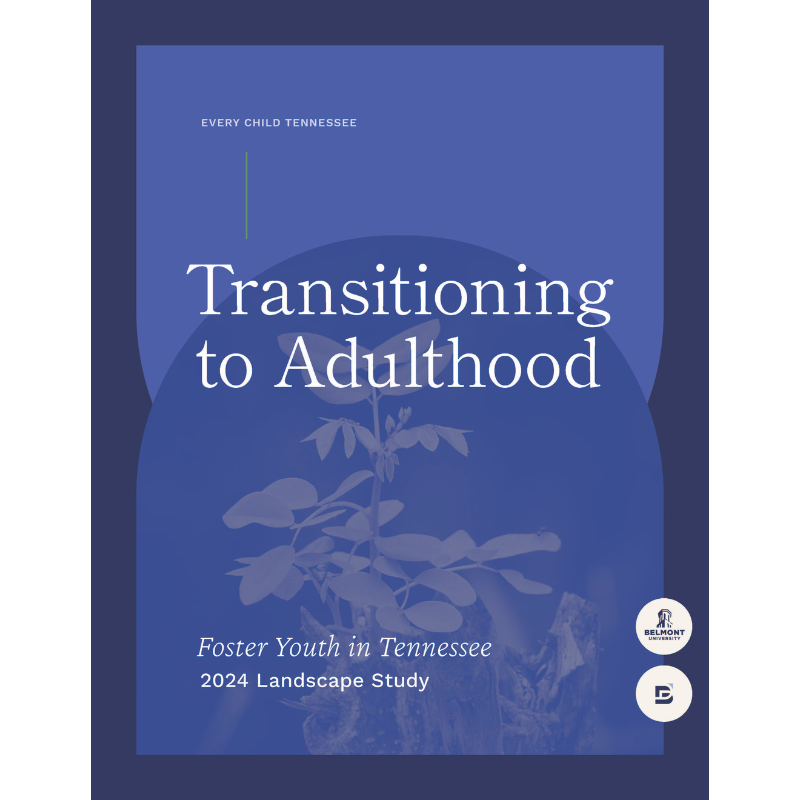
The council partnered with Belmont Innovation Labs to find the highest-leverage points: where would investment yield the greatest gain in youth outcomes? Eight months of structured discovery — interviews, ecosystem mapping, data review with DCS — surfaced three priorities.
- Consistent and Supportive Adult Relationships. Every transitioning youth needs at least one trusted adult in their life.
- Safe and Affordable Housing. Permanent, stable placements before, during, and after transition — with youth voice in housing preferences.
- Accessible Mental Health Services. Coverage, access, and trauma-informed care for everyone working with foster youth.
Read the full Landscape Study, cta_link_type=link, hover_background_color=transparent, image={alt=foster-youth-landscape-study, height=800, src=https://41670438.fs1.hubspotusercontent-na1.net/hubfs/41670438/foster-youth-landscape-study.png, width=800}, left_border_color=transparent, left_border_style=none, link={url={type=EXTERNAL, content_id=null, href=https://www.belmont.edu/innovation-labs/foster-care-lab/, href_with_scheme=https://www.belmont.edu/innovation-labs/foster-care-lab/}, open_in_new_tab=true, no_follow=false, sponsored=false, user_generated_content=false, rel=noopener}, link_aria_label=, padding=6, top_border_color=transparent, top_border_style=none}
Step 02 — September 2023 to May 2024
The Landscape Study
The council partnered with Belmont Innovation Labs to find the highest-leverage points: where would investment yield the greatest gain in youth outcomes? Eight months of structured discovery — interviews, ecosystem mapping, data review with DCS — surfaced three priorities.
- Consistent and Supportive Adult Relationships. Every transitioning youth needs at least one trusted adult in their life.
- Safe and Affordable Housing. Permanent, stable placements before, during, and after transition — with youth voice in housing preferences.
- Accessible Mental Health Services. Coverage, access, and trauma-informed care for everyone working with foster youth.
Read the full Landscape Study
The complication
Each priority lived in a completely different system. Housing meant deep HUD voucher expertise. Mental health access meant TennCare navigation. Supportive adult relationships didn't even have a government program — only LifeSet and Bright Futures, both of which only reach youth still eligible and willing to engage with child welfare. The youth most at risk were often the ones least likely to participate. The numbers told a sobering story.
, cta_link_type=link, hover_background_color=transparent, image={alt=null, src=null}, left_border_color=secondary, left_border_style=none, link={url={type=EXTERNAL, content_id=null, href=, href_with_scheme=}, open_in_new_tab=false, no_follow=false, sponsored=false, user_generated_content=false, rel=}, link_aria_label=, padding=6, top_border_color=transparent, top_border_style=none}The complication
Each priority lived in a completely different system. Housing meant deep HUD voucher expertise. Mental health access meant TennCare navigation. Supportive adult relationships didn't even have a government program — only LifeSet and Bright Futures, both of which only reach youth still eligible and willing to engage with child welfare. The youth most at risk were often the ones least likely to participate. The numbers told a sobering story.
Step 03 — November 2024 to June 2025
The Impact Case
If the Landscape Study established where to act, the Impact Case made the argument for how: venture philanthropy. Capital deployed strategically against tightly-defined leverage points, paired with technical assistance and cross-sector collaboration.
Through Belmont Innovation Labs' relationship with Access Ventures, the Reconstruct Innovation Challenge raised $1.5 million — funding two pilots per priority area, with structured cohort support across the year.
Step 03 — November 2024 to June 2025
The Impact Case
If the Landscape Study established where to act, the Impact Case made the argument for how: venture philanthropy. Capital deployed strategically against tightly-defined leverage points, paired with technical assistance and cross-sector collaboration.
Through Belmont Innovation Labs' relationship with Access Ventures, the Reconstruct Innovation Challenge raised $1.5 million — funding two pilots per priority area, with structured cohort support across the year.
Step 04 — 2026 / pilot launch
Six innovators. Three priority areas. One year-long pilot.
From a competitive challenge process, six pilots were funded — two per priority area. Each is now in the first months of a structured year-long pilot, with leading and lagging KPIs reported monthly to the Reconstruct cohort.
01 Consistent and Supportive Adult Relationships
Connect Our Kids
Mapping each youth's relationship network.
The Family Connections platform helps youth and caseworkers identify supportive adults already in a young person's network — relatives, mentors, neighbors, former teachers — and surface potential connections that might otherwise go unnoticed. Includes relational health training for providers.
KPIs to watch (Year 1)
- ≥20 connections identified per youth, with ≥2 potential active supporters
- % of youth reporting at least 2 consistent supportive adults at 6–18 months
- % maintaining monthly contact with at least one supportive adult
- Increase in kinship/family-based placements vs. baseline
Connect Our Kids
Mapping each youth's relationship network.
The Family Connections platform helps youth and caseworkers identify supportive adults already in a young person's network — relatives, mentors, neighbors, former teachers — and surface potential connections that might otherwise go unnoticed. Includes relational health training for providers.
KPIs to watch (Year 1)
- ≥20 connections identified per youth, with ≥2 potential active supporters
- % of youth reporting at least 2 consistent supportive adults at 6–18 months
- % maintaining monthly contact with at least one supportive adult
- Increase in kinship/family-based placements vs. baseline
Forward Steps
Guardian Scholars: mentor-anchored postsecondary success.
Forward Steps' Guardian Scholars pilot pairs transition-age youth in Chattanooga with trained mentors and wraparound stabilization — housing, food, healthcare, transportation, childcare — through 12 months of postsecondary enrollment.
KPIs to watch (Year 1)
- 10 students recruited and retained in Year 1 cohort (Jul/Aug 2026 start)
- Trusted-adult relationship developed with Guardian Scholar mentor
- Stabilization on housing, food, healthcare, transportation, childcare
- Postsecondary enrollment, persistence, GPA, credit completion
Forward Steps
Guardian Scholars: mentor-anchored postsecondary success.
Forward Steps' Guardian Scholars pilot pairs transition-age youth in Chattanooga with trained mentors and wraparound stabilization — housing, food, healthcare, transportation, childcare — through 12 months of postsecondary enrollment.
KPIs to watch (Year 1)
- 10 students recruited and retained in Year 1 cohort (Jul/Aug 2026 start)
- Trusted-adult relationship developed with Guardian Scholar mentor
- Stabilization on housing, food, healthcare, transportation, childcare
- Postsecondary enrollment, persistence, GPA, credit completion
02 Safe and Affordable Housing
Jonathan's Path
Three housing tiers + a 24/7 crisis line.
Jonathan's Path operates a graduated housing model — Path Homes, Path Forward, and Path Beyond — alongside Pathline, a direct-resource crisis line for transition-age youth navigating housing instability.
KPIs to watch (Year 1)
- # youth actively housed across the three Path tiers
- % with zero placement disruptions or eviction notices each month
- Stable housing maintained without a crisis move (6–12 months)
- Vital documents, driver's license, employment, banking, lease apps secured
- Days from referral to housing placement
Jonathan's Path
Three housing tiers + a 24/7 crisis line.
Jonathan's Path operates a graduated housing model — Path Homes, Path Forward, and Path Beyond — alongside Pathline, a direct-resource crisis line for transition-age youth navigating housing instability.
KPIs to watch (Year 1)
- # youth actively housed across the three Path tiers
- % with zero placement disruptions or eviction notices each month
- Stable housing maintained without a crisis move (6–12 months)
- Vital documents, driver's license, employment, banking, lease apps secured
- Days from referral to housing placement
Elmington Elevates / Lumen Flats
A dedicated apartment complex for aging-out youth.
Elmington Elevates partnered with TN DCS to launch Lumen Flats — the first apartment complex in the country to dedicate units to Foster Youth to Independence (FYI) Project-Based Vouchers, with onsite case management and resident programming.
KPIs to watch (Year 1)
- # of leased FYI PBV units
- # of resident programs offered + monthly stipends paid for participation
- % of residents attending case management + recommended programs
- % transitioning to independent housing (1–3 years)
- % with higher annual income year-over-year
Elmington Elevates / Lumen Flats
A dedicated apartment complex for aging-out youth.
Elmington Elevates partnered with TN DCS to launch Lumen Flats — the first apartment complex in the country to dedicate units to Foster Youth to Independence (FYI) Project-Based Vouchers, with onsite case management and resident programming.
KPIs to watch (Year 1)
- # of leased FYI PBV units
- # of resident programs offered + monthly stipends paid for participation
- % of residents attending case management + recommended programs
- % transitioning to independent housing (1–3 years)
- % with higher annual income year-over-year
03 Accessible Mental Health Services
TN Voices / UpFrom
Therapy + a digital ecosystem of trusted adults.
TN Voices' UpFrom platform combines scheduled therapy with an active ecosystem of partner organizations — referrals, marketplace resources, goal tracking — so youth have multiple connection points in one place.
KPIs to watch (Year 1)
- 8–12 active referral, therapy, and marketplace partners
- % attending scheduled therapy + engaging with platform 2×/month
- % identifying a trusted adult within 90 days; documenting goals within 60 days
- Long-term therapeutic continuity at 12 months
- Sustained trusted-adult relationship at 12 months
TN Voices / UpFrom
Therapy + a digital ecosystem of trusted adults.
TN Voices' UpFrom platform combines scheduled therapy with an active ecosystem of partner organizations — referrals, marketplace resources, goal tracking — so youth have multiple connection points in one place.
KPIs to watch (Year 1)
- 8–12 active referral, therapy, and marketplace partners
- % attending scheduled therapy + engaging with platform 2×/month
- % identifying a trusted adult within 90 days; documenting goals within 60 days
- Long-term therapeutic continuity at 12 months
- Sustained trusted-adult relationship at 12 months
New Culture Project
Youth Navigators inside the CFTM.
The New Culture Project embeds Youth Navigators directly into Child and Family Team Meetings (CFTMs) — the case-planning sessions where Independent Living and Transition Plans are written — to ensure youth voice and follow-through.
KPIs to watch (Year 1)
- # of youth actively engaged with a Navigator
- # of IL and Transition Plans updated during CFTM
- % reporting higher satisfaction with transition planning (CANS, NYTD, STEP)
- % with improved mental health engagement
- % with improved post-18 housing plan satisfaction
New Culture Project
Youth Navigators inside the CFTM.
The New Culture Project embeds Youth Navigators directly into Child and Family Team Meetings (CFTMs) — the case-planning sessions where Independent Living and Transition Plans are written — to ensure youth voice and follow-through.
KPIs to watch (Year 1)
- # of youth actively engaged with a Navigator
- # of IL and Transition Plans updated during CFTM
- % reporting higher satisfaction with transition planning (CANS, NYTD, STEP)
- % with improved mental health engagement
- % with improved post-18 housing plan satisfaction
Early result — already on the ground
Lumen Flats: the first of its kind in the country.
Created out of the Reconstruct effort, Lumen Flats is the first apartment complex in the country to use Foster Youth to Independence (FYI) Project-Based Vouchers directly on the unit — designating this housing for transition-age youth for the next 20 years. Youth have already moved in. The pilot is incredibly early, but the first proof point is on the ground.
See Lumen Flats, cta_link_type=link, hover_background_color=transparent, image={alt=null, src=null}, left_border_color=transparent, left_border_style=none, link={url={type=EXTERNAL, content_id=null, href=, href_with_scheme=}, open_in_new_tab=false, no_follow=false, sponsored=false, user_generated_content=false, rel=}, link_aria_label=, padding=6, top_border_color=transparent, top_border_style=none}Early result — already on the ground
Lumen Flats: the first of its kind in the country.
Created out of the Reconstruct effort, Lumen Flats is the first apartment complex in the country to use Foster Youth to Independence (FYI) Project-Based Vouchers directly on the unit — designating this housing for transition-age youth for the next 20 years. Youth have already moved in. The pilot is incredibly early, but the first proof point is on the ground.
See Lumen FlatsImplementation partners
Four priorities. Four trusted partners.

Preservation
CarePortal
Recruitment
The Contingent
Retention
CarePortal
Transition
Belmont Innovation Labs
An initiative of
The Tennessee Governor's Faith-Based and Community Initiative.
The Governor's Faith-Based and Community Initiative (GFBCI) mobilizes Tennessee's Community-Based Organizations (CBOs) and Faith-Based Organizations (FBOs) to unite with state government in serving vulnerable Tennesseans — in partnership with the Tennessee Department of Children's Services.
Your move
There's a way for every Tennessean to show up.
You don't need to be a foster family to be part of the answer. Whether you're showing up as an individual or organizing your church to respond, there's a clear next step. Pick the path that fits.
Individual response
Show up however you can — there's no wrong place to start.
Foster a child
Open your home to a child, sibling group, or teen waiting for placement — short-term, long-term, or kinship.
, cta_link_type=link, hover_background_color=transparent, image={alt=null, src=null}, left_border_color=secondary, left_border_style=none, link={url={type=EXTERNAL, content_id=null, href=https://everychildtn.org/foster-care/, href_with_scheme=https://everychildtn.org/foster-care/}, open_in_new_tab=true, no_follow=false, sponsored=false, user_generated_content=false, rel=noopener}, link_aria_label=, number_content=i., padding=6, top_border_color=transparent, top_border_style=none}Foster a child
Open your home to a child, sibling group, or teen waiting for placement — short-term, long-term, or kinship.
Volunteer
Mentor, transport, tutor, or simply show up alongside foster youth and the families serving them.
, cta_link_type=link, hover_background_color=transparent, image={alt=null, src=null}, left_border_color=secondary, left_border_style=none, link={url={type=EXTERNAL, content_id=null, href=https://everychildtn.org/volunteer/, href_with_scheme=https://everychildtn.org/volunteer/}, open_in_new_tab=true, no_follow=false, sponsored=false, user_generated_content=false, rel=noopener}, link_aria_label=, number_content=ii., padding=6, top_border_color=transparent, top_border_style=none}Volunteer
Mentor, transport, tutor, or simply show up alongside foster youth and the families serving them.
Meet a tangible need
Through CarePortal, real needs of vulnerable children — a bed, diapers, school supplies — get connected to neighbors ready to give.
, cta_link_type=link, hover_background_color=transparent, image={alt=null, src=null}, left_border_color=secondary, left_border_style=none, link={url={type=EXTERNAL, content_id=null, href=https://www.careportal.org/, href_with_scheme=https://www.careportal.org/}, open_in_new_tab=true, no_follow=false, sponsored=false, user_generated_content=false, rel=noopener}, link_aria_label=, number_content=iii., padding=6, top_border_color=transparent, top_border_style=none}Meet a tangible need
Through CarePortal, real needs of vulnerable children — a bed, diapers, school supplies — get connected to neighbors ready to give.
Church & faith community response
Mobilize your congregation around the foster care system in your county.
Sign up your church for CarePortal
Mobilize your congregation to meet the tangible needs of vulnerable children and families across your county.
, cta_link_type=link, hover_background_color=transparent, image={alt=null, src=null}, left_border_color=secondary, left_border_style=none, link={url={type=EXTERNAL, content_id=null, href=https://www.careportal.org/, href_with_scheme=https://www.careportal.org/}, open_in_new_tab=true, no_follow=false, sponsored=false, user_generated_content=false, rel=noopener}, link_aria_label=, number_content=i., padding=6, top_border_color=transparent, top_border_style=none}Sign up your church for CarePortal
Mobilize your congregation to meet the tangible needs of vulnerable children and families across your county.
Wrap around foster families as a church
Organize a wraparound team — meals, respite, prayer, household help — for a fostering family. The retention work that prevents burnout starts here.
, cta_link_type=link, hover_background_color=transparent, image={alt=null, src=null}, left_border_color=secondary, left_border_style=none, link={url={type=EXTERNAL, content_id=null, href=https://americaskidsbelong.org/states/tn, href_with_scheme=https://americaskidsbelong.org/states/tn}, open_in_new_tab=true, no_follow=false, sponsored=false, user_generated_content=false, rel=noopener}, link_aria_label=, number_content=ii., padding=6, top_border_color=transparent, top_border_style=none}Wrap around foster families as a church
Organize a wraparound team — meals, respite, prayer, household help — for a fostering family. The retention work that prevents burnout starts here.
Connect your faith community
Beyond CarePortal and wraparound, find the path that fits your congregation — advocacy, awareness, mentorship, and partnership.
, cta_link_type=link, hover_background_color=transparent, image={alt=null, src=null}, left_border_color=secondary, left_border_style=none, link={url={type=EXTERNAL, content_id=null, href=http://www.everychildtn.org/faith-leaders, href_with_scheme=http://www.everychildtn.org/faith-leaders}, open_in_new_tab=true, no_follow=false, sponsored=false, user_generated_content=false, rel=noopener}, link_aria_label=, number_content=iii., padding=6, top_border_color=transparent, top_border_style=none}Connect your faith community
Beyond CarePortal and wraparound, find the path that fits your congregation — advocacy, awareness, mentorship, and partnership.